


Skip to content
Bet the Heat with Cool A/C tips from Grand Subaru
Fuel Efficiency Subaru Maintenance Tips Education

Beat the Chicago Summer Heat: How to Keep AC Cool During the Heat in Your Vehicle

Subie
Subie
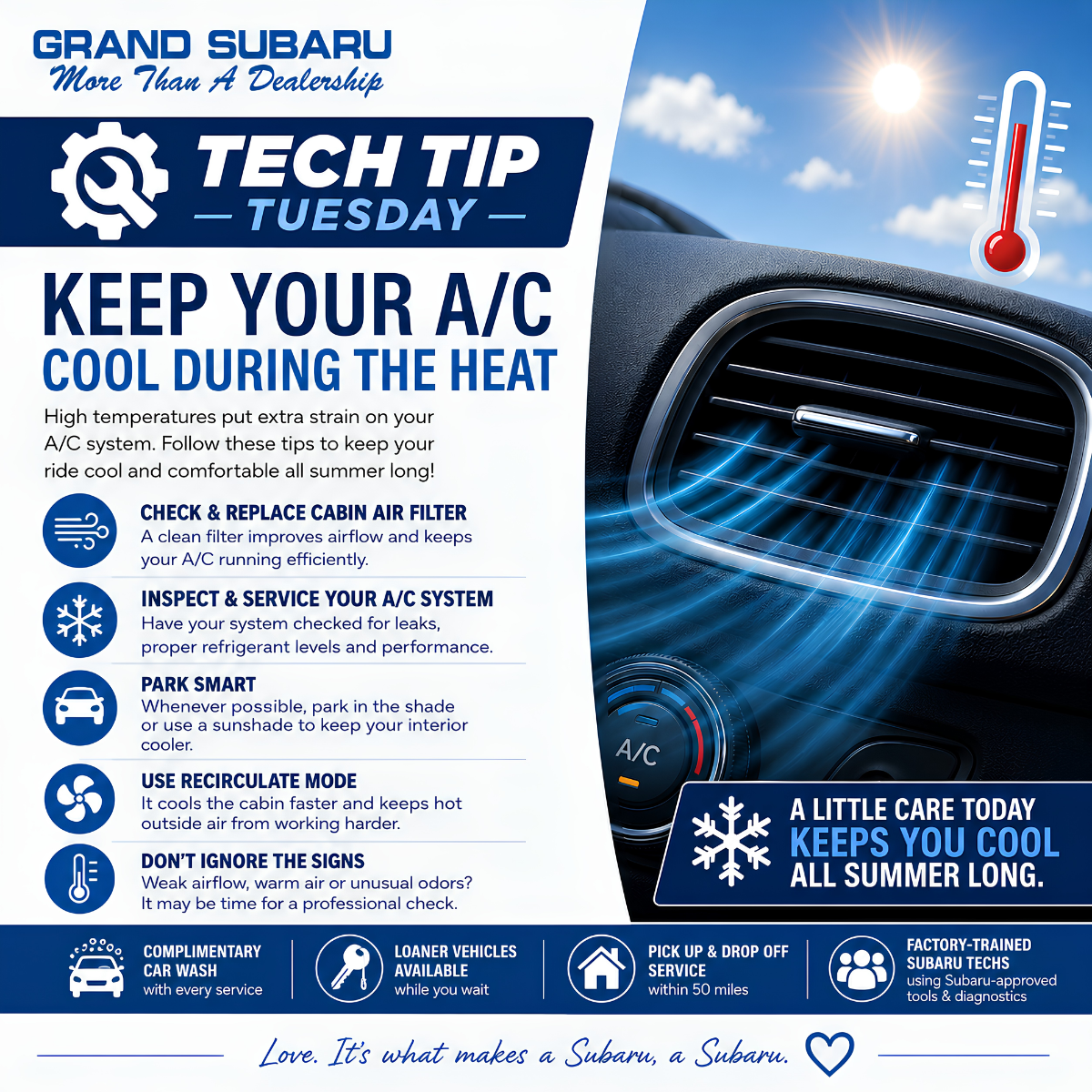
Tech Tip Tuesday 7.21.26
 
Summers in the Chicago metropolitan area, spanning from the bustling streets of Elmhurst to the serene residential neighborhoods of Lombard and Bensenville, are notoriously demanding. When July and August roll around, thermometer mercury routinely spikes, creating a brutal greenhouse effect inside parked vehicles. Stepping into a car that has been baking under the mid-day sun can feel like entering an industrial oven. Understanding how to keep AC cool during the heat is not just a matter of basic comfort; it is a critical safety concern for families, commuters, and pets alike. At Grand Subaru, we believe that your daily drive should be a sanctuary from the elements, which is why we have compiled this comprehensive, expert-backed guide to help you optimize your vehicle's climate control system.

Many drivers assume that maximizing their air conditioning system's output is as simple as turning the temperature dial to its lowest setting and cranking the fan speed to the maximum. However, automotive climate control is a complex system of thermodynamics, fluid dynamics, and mechanical components that require deliberate practices to operate at peak efficiency. Throughout this detailed exploration, we will cover the science of cabin heat soak, demystify the control panel, analyze aerodynamic trade-offs, and address essential preventive maintenance. Whether you are driving a brand-new Subaru Forester or a reliable pre-owned vehicle, these insights will empower you to conquer the hottest summer days with ease. If you suspect your system is already struggling, do not hesitate to Schedule Your Service Today with our factory-trained technicians.

What Are the Best Practical Steps to Cool Down a Hot Car Cabin Quickly?

To understand what are the best practical steps to cool down a hot car cabin quickly, we must first look at the physics of cabin heat soak. When your vehicle sits under direct sunlight, solar radiation passes through the glass windows, warming the dark dashboard, seats, and steering wheel. These materials absorb heat and slowly radiate it back, raising the ambient air temperature inside the cabin to upwards of 140 degrees Fahrenheit. Simply turning on the AC on full blast while stationary is incredibly inefficient because the system has to work twice as hard to cool superheated, stagnant air. Instead, we recommend a dynamic ventilation strategy that utilizes natural airflow to flush out the heat before the AC compressor does the heavy lifting.

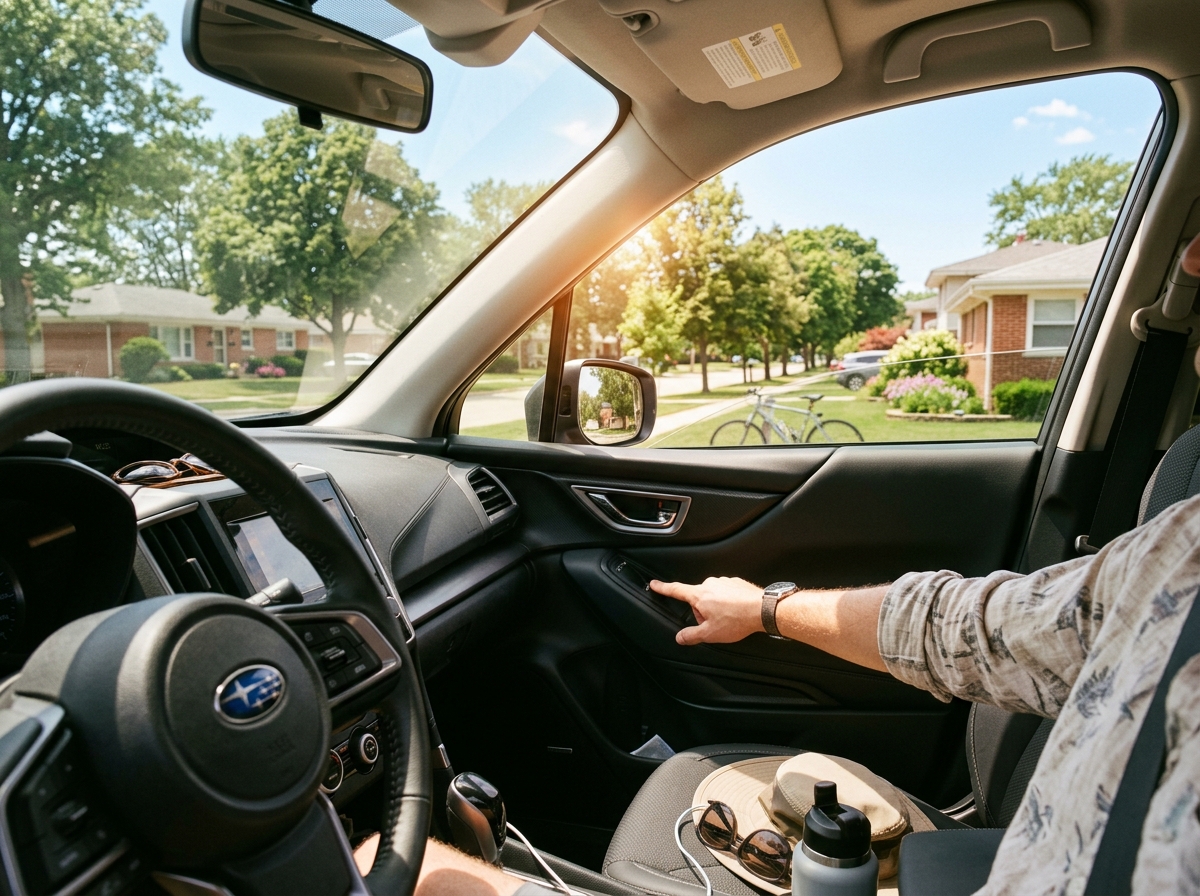
The most effective method is often referred to as the 'bellows' technique. Before turning on the engine, roll down the front passenger-side window completely. Walk over to the driver's side and open and close the driver's door firmly five to six times. This simple motion acts as a giant pump, forcing the superheated air out of the open passenger window while drawing in slightly cooler ambient outside air. Once you start driving, keep all the passenger windows rolled down for the first minute or two. Set your air conditioner to fresh air mode (not recirculation) with the fan speed on medium. This utilizes the natural forward movement of your car to force the remaining hot air out of the cabin cabin through the open windows, giving your AC evaporator a much cooler baseline to start cooling.

Interior view of a Subaru dashboard and a passenger reaching for the door controls on a sunny day. (Representative image for illustration purposes only. Actual vehicle may vary based on trim and configuration.)

Once the initial blast of superheated air has escaped, roll up all the windows and switch your climate control to recirculation mode. This transition ensures that the air conditioner is now cooling air that has already been partially conditioned, rather than continuously drawing in scorching outside air. By timing this transition correctly, you can reduce the time it takes to reach a comfortable cabin temperature by up to 50 percent, while simultaneously saving fuel and reducing wear on your vehicle's engine and belt systems.

How Does the AC Recirculate Button Help Cool the Car Faster During Extreme Heat?

Where is the Button Located?

To successfully leverage this feature, it helps to know exactly where is the recirculate button typically located on a vehicle dashboard. In almost all modern vehicles, including the entire Subaru lineup, the button is located within the central climate control stack. It is easily identifiable by an icon depicting the silhouette of a car with a curved, looping arrow inside it. In some newer vehicles with advanced touchscreen interfaces, this physical button has been integrated into the digital climate menu, but it retains the exact same symbolic icon. Activating this control closes an intake flap near the front cowl, preventing outside air from entering the vehicle HVAC system.

The Efficiency of Recycled Air

So, how does the AC recirculate button help cool the car faster during extreme heat? When set to fresh air mode, the system constantly pulls in scorching 95-degree outside air and works continuously to cool it down to 60 degrees. This creates an enormous, continuous thermal load on the compressor. When you activate recirculation, the system stops drawing in exterior air and instead pulls in the air that is already inside the cabin. As the cabin cools from 95 to 80 degrees, and eventually down to 70 degrees, the AC is recycling already-cooled air, meaning it has to perform far less heat exchange. This thermal loop drastically speeds up cabin cooling.

Practical Scenarios

Beyond rapid cooling, recirculation is highly beneficial when sitting in heavy traffic on the Tri-State Tollway or navigating urban corridors where exhaust fumes are concentrated. Closing off the outside intake prevents particulate matter, carbon monoxide, and unpleasant odors from entering your breathing space. However, we advise drivers to occasionally switch back to fresh air mode on long road trips. Keeping the system on recirculation for hours can lead to slightly elevated humidity and carbon dioxide levels inside the vehicle, which can cause minor drowsiness. Balancing both modes ensures a fresh, oxygen-rich, and crisp interior atmosphere.

Does Parking in the Shade Actually Prevent the Car AC From Working Too Hard?

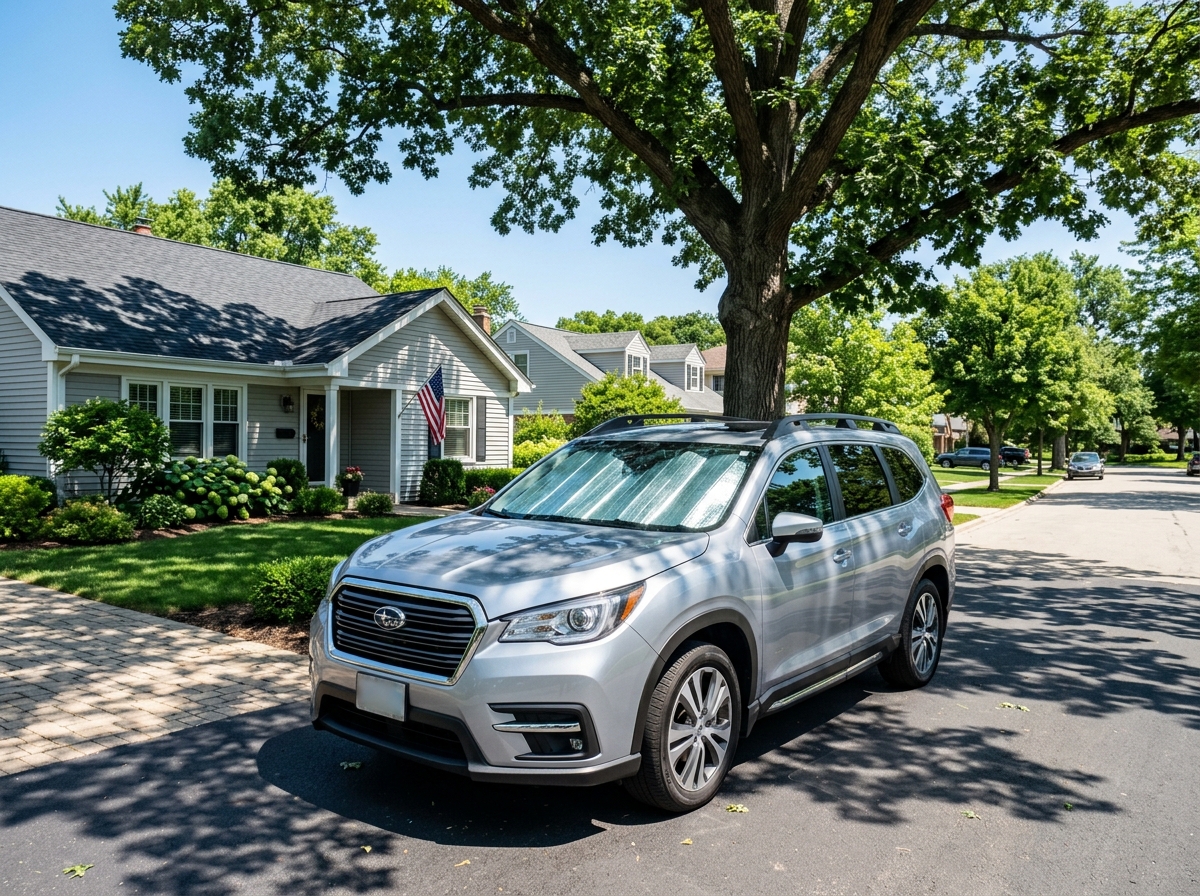
It is a common piece of advice passed down through generations of drivers, but does parking in the shade actually prevent the car AC from working too hard? The short answer is an absolute yes. When a vehicle is parked in direct sunlight, it absorbs radiant energy via solar heat gain. This radiation heats the physical structure of the car, including the sheet metal, the glass, and the extensive interior plastics. By parking under a tree, a building shadow, or a parking structure, you eliminate direct solar radiation, relying only on the ambient air temperature. This simple act can keep the internal cabin temperature up to 30 to 40 degrees cooler than a vehicle parked in direct sunlight.

When your vehicle's starting internal temperature is significantly lower, the air conditioning system is spared from a massive initial workload. High cabin temperatures translate to higher high-side pressures within the AC refrigerant lines. To pump heat out of an extremely hot car, the compressor must work at peak capacity for a prolonged period, consuming more fuel and creating excessive wear on the system's clutch. By minimizing this initial thermal spike, you preserve the longevity of your compressor, condenser, and expansion valves. Furthermore, utilizing high-quality reflective windshield sunshades when shade is unavailable is an excellent secondary line of defense that physically blocks solar rays from hitting the dark, heat-absorbent dashboard.

A silver Subaru SUV with a windshield sunshade parked under a shady tree in a suburban driveway. (Representative image for illustration purposes only. Actual vehicle may vary based on trim and configuration.)

Even with diligent parking habits, a summer heatwave will eventually test the limits of your vehicle's climate controls. If you notice that your air conditioner takes an exceptionally long time to produce cold air even when parked in a shady spot, there may be a deeper mechanical issue at play. This is the perfect time to schedule a preventative check-up at Grand Subaru. Our service center is conveniently located in Bensenville, making it incredibly simple for drivers throughout DuPage County to drop off their vehicle for a quick, precise system diagnostic before embarking on long summer road trips.

At What Speed Does Using AC Become More Efficient Than Opening Windows?

Aerodynamic Drag

The question of at what speed does using AC become more efficient than opening windows is a classic automotive debate that boils down to aerodynamic drag versus mechanical engine load. When you open your car's windows, you disrupt the carefully engineered aerodynamic profile of the vehicle. Wind rushes into the cabin, creating a massive pocket of air resistance known as drag. This forces the engine to burn more fuel just to maintain forward momentum, particularly at higher velocities where wind resistance increases exponentially.

The Tipping Point

Extensive testing by automotive engineering societies has shown that the crossover threshold typically occurs between 45 and 55 mph. Below this speed, such as when navigating residential streets in Oakbrook Terrace, the aerodynamic penalty of open windows is relatively minor. At these lower speeds, turning off your AC and rolling down the windows is generally more fuel-efficient. However, once you accelerate onto the highway or the interstate, the wind drag of open windows becomes so severe that it consumes more energy than running the AC compressor.

Optimizing Your Commute

To optimize your fuel economy during daily commutes, adopt a hybrid driving habit. Keep your windows open while driving through town, stop-and-go traffic, and parking lots to enjoy natural air and save fuel. Once you merge onto high-speed expressways, roll up the windows completely and engage the climate control. This keeps your vehicle sleek, quiet, and incredibly efficient, ensuring your engine runs smoothly without unnecessary drag while keeping you blissfully cool.

Driving Speed (MPH)

Best Cooling Method

Efficiency Impact / Reason

0 - 35 MPH

Open Windows

Minimal aerodynamic drag; saves engine fuel load

35 - 45 MPH

Driver's Choice

Negligible difference; comfort preference wins

45 - 55+ MPH

A/C System ON

High aerodynamic drag with open windows dramatically reduces fuel economy

How Often Should You Replace a Vehicle Cabin Air Filter to Maintain Airflow?

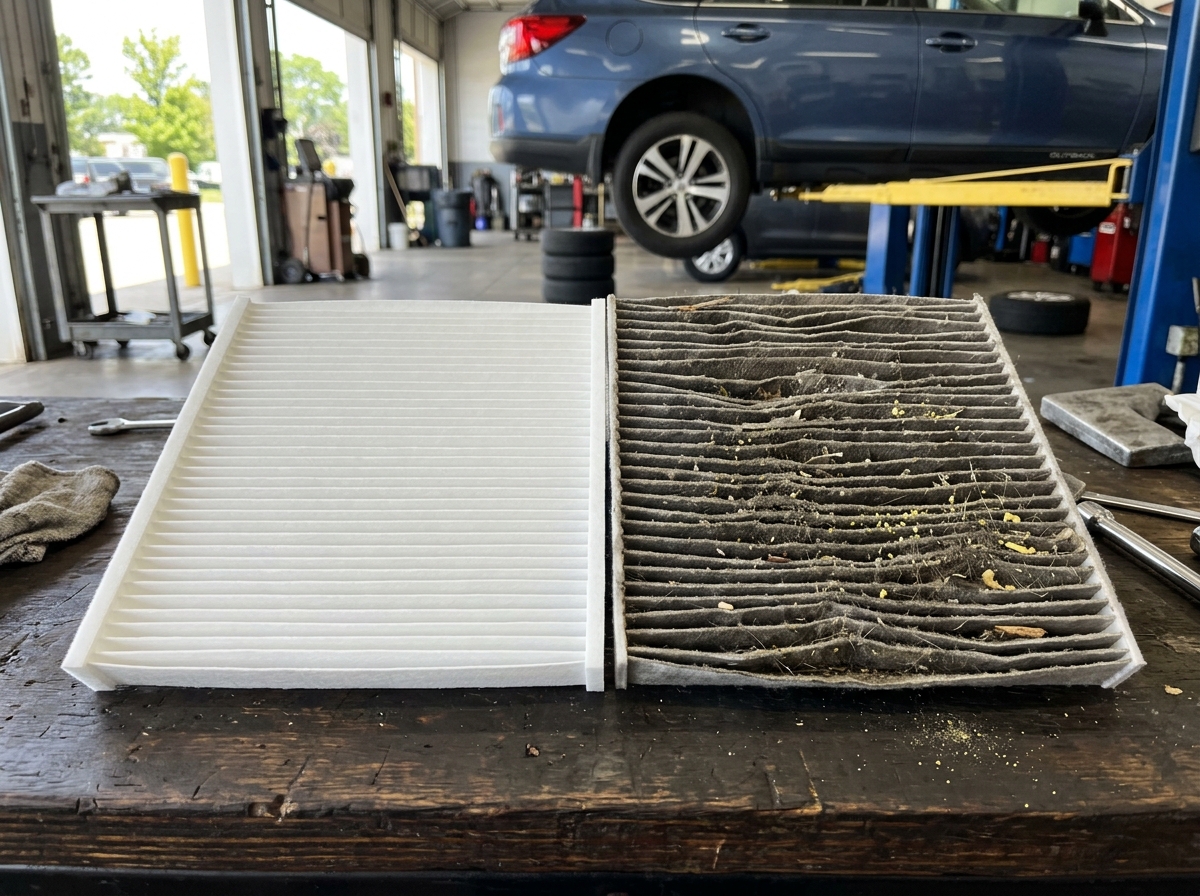
A clean, white new car air filter next to a dirty, debris-clogged old air filter on a workbench. (Representative image for illustration purposes only. Actual vehicle may vary based on trim and configuration.)

A highly overlooked component of the vehicle cooling system is the filtration element. When customers ask, how often should you replace a vehicle cabin air filter, our certified service advisors generally recommend replacement every 12,000 to 15,000 miles, or at least once a year. However, if you frequently drive on dusty gravel roads, navigate construction zones around Chicago, or suffer from severe seasonal allergies, you may need to replace it more frequently. This relatively simple filter is responsible for capturing dust, pollen, soot, and mold spores before they enter the vehicle interior.

Understanding how does a dirty cabin air filter impact vehicle AC cooling efficiency is key to recognizing why regular replacement is so critical. Think of the cabin air filter as the lungs of your climate control system. When the filter material becomes choked with road debris, it restricts the volume of air that can physically pass through the HVAC blower motor. As a result, even if your air conditioning system is working flawlessly at producing icy cold air, the fan will only be able to blow a weak, lukewarm breeze out of your dashboard vents. This lack of robust airflow prevents the cabin from cooling down efficiently and places excessive strain on the blower motor itself.

There is also a much more severe technical risk associated with neglecting this component: can a dirty cabin air filter cause the AC evaporator to freeze? Yes, it can. The evaporator core inside your dashboard relies on constant, warm airflow passing over its metallic fins to facilitate heat exchange. If the airflow is severely choked by a clogged filter, the refrigerant flowing through the evaporator will drop below freezing without absorbing sufficient heat. Moisture in the air will rapidly condense and freeze solid on the evaporator fins, completely blocking what little airflow remained. If you notice your AC blowing cold for a few minutes and then stopping altogether, a frozen evaporator due to a dirty filter is a prime suspect.

To maintain optimal cooling output, you can easily Order Genuine Subaru Parts directly through Grand Subaru. Our parts department carries exact-fit OEM cabin air filters designed specifically for your model's dimensions, ensuring a perfect seal and maximum filtration capacity.

Does a Car AC Refrigerant Ever Need to Be Topped Off If There Are No Leaks?

Among the most pervasive myths in automotive maintenance is that vehicle air conditioners naturally consume refrigerant over time, much like an engine consumes fuel or motor oil. To set the record straight: does a car AC refrigerant ever need to be topped off if there are no leaks? No, it does not. An automotive air conditioning system is designed and manufactured as a completely closed, hermetically sealed loop. The chemical refrigerant (whether older R-134a or the modern eco-friendly R-1234yf used in newer Subaru vehicles) is pressurized and continuously cycled between liquid and gaseous states without ever escaping. If your system is low on refrigerant, it is because there is a physical leak somewhere in the loop, such as a microscopic tear in a rubber hose, a cracked condenser from road debris, or a failing O-ring seal.

Recognizing the problem early can save you from a costly component failure. What are the technical signs that a vehicle AC system is low on refrigerant? The most immediate symptom is a gradual decline in cooling performance; the air coming from your vents may feel cool but not truly cold. You might also hear a distinct, persistent hissing or gurgling sound coming from behind the dashboard when the system is running, which indicates gas bubbles in the liquid refrigerant line. Under the hood, you may notice the AC compressor clutch rapidly cycling on and off every few seconds. This rapid cycling is triggered by the low-pressure safety switch, which cuts power to the compressor to prevent it from running dry without the lubricating oil that travels alongside the refrigerant.

Attempting to solve this problem by purchasing a 'do-it-yourself' recharge kit from a retail auto parts store can be incredibly dangerous for your vehicle. These consumer cans lack the precision pressure gauges needed to measure system charge accurately. Because automotive AC loops are highly sensitive, even a few ounces of overcharging can hydraulically lock and destroy the expensive compressor. Professional diagnostics involve evacuating the remaining refrigerant, performing a deep vacuum decay test to identify leaks, and recharging the system with the exact weight of refrigerant specified by the manufacturer down to the gram. Our certified service technicians use advanced recovery and recharge stations to handle these complex procedures safely and legally.

Why Does a Car AC Blow Cold When Driving but Warm When Idling?

Few driving experiences are more frustrating than sitting at a long red light on Grand Avenue in Bensenville and feeling your once-icy air conditioner slowly turn into a warm, humid breeze, only to magically recover once you accelerate. This symptom answers a very common question: why does a car AC blow cold when driving but warm when idling? To understand this behavior, we have to examine the mechanical relationship between engine speed and system pressure, as well as the crucial role of airflow across the front condenser.

First, consider how low refrigerant causes poor cooling specifically during idle. The AC compressor is driven by a belt connected to your vehicle's engine crankshaft. When your engine is idling (around 700 to 800 RPM), the compressor spins slowly, creating less pressure. If your refrigerant charge is already low, this slow rotation fails to generate enough pressure differential to vaporize the refrigerant inside the evaporator. However, once you start driving and the engine speeds up to 2,000+ RPM, the compressor spins much faster, artificially boosting the operating pressure enough to temporarily restore cold airflow.

{
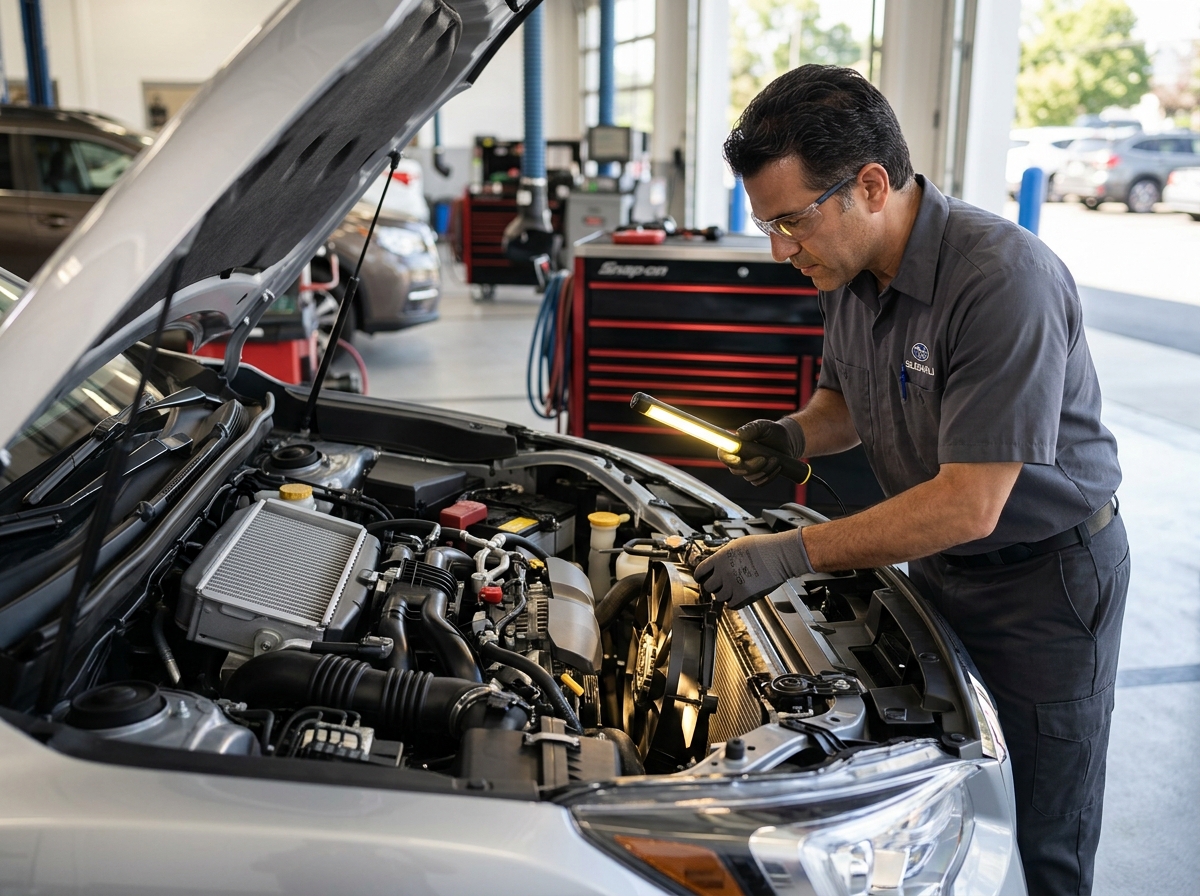
  "altText": "A mechanic wearing safety glasses inspects a car engine with a hand-held work light in an auto repair shop.", (Representative image for illustration purposes only. Actual vehicle may vary based on trim and configuration.)

Additionally, we must ask what role does the engine cooling system play in AC performance? When your car is stationary, there is no natural wind rushing through the front grille. The system relies entirely on electric radiator cooling fans to pull air through the condenser to cool the high-pressure refrigerant. If these fans are failing, or if your radiator is partially clogged with dirt and road grime, heat cannot be extracted. Once you start moving, natural wind flow takes over, cooling the condenser and restoring AC performance. If you are experiencing this frustrating issue, let our expert service team diagnose the root cause so you can enjoy consistent cooling everywhere you go.

Does Running the AC Drastically Reduce an Electric Vehicle Range?

Modern Heat Pumps

As electric vehicles like the innovative Subaru Solterra become increasingly popular across Northern Illinois, drivers naturally wonder: does running the AC drastically reduce an electric vehicle range? Unlike older electric vehicles that relied on power-hungry resistive heating and cooling systems, modern EVs utilize highly efficient electric scroll compressors and advanced heat pump systems. These state-of-the-art designs consume a fraction of the energy previously required, keeping range impact to a minimum.

The Real-World Impact

In typical summer conditions, running your cabin air conditioning system will only impact your total battery range by approximately 3% to 8%. This is a remarkably small trade-off for passenger comfort and safety. The battery management systems in modern Subarus are engineered to dynamically prioritize safety and cabin conditions, ensuring that your driving dynamics, safety systems, and interior cooling work in perfect harmony without any sudden drops in estimated driving range.

Pre-Conditioning Tips

To eliminate range anxiety entirely, we highly recommend utilizing 'pre-conditioning.' Through your vehicle's smartphone app, you can program your car's climate control to turn on while the vehicle is still plugged into your home charger. This cools down the cabin using electricity from the power grid, preserving 100% of your battery capacity for the road. Once you unplug and begin your drive, the AC only needs a minimal amount of energy to maintain that comfortable temperature.

What Questions Should I Ask a Mechanic Before Approving Car AC Repairs?

When faced with automotive repairs, transparency and technical expertise are paramount. Knowing exactly what questions should I ask a mechanic before approving car AC repairs can save you from unnecessary expenses and ensure your vehicle is repaired correctly the first time. The air conditioning system is complex, and a proper diagnostic requires specialized tools and technical certifications. We always encourage vehicle owners to ask detailed questions to ensure they are getting a thorough, professional inspection.

First, ask:'Does the diagnostic fee apply toward the cost of the repair?' Most reputable service centers will clarify this upfront. Second, ask:'How did you identify the leak?' Reliable shops use advanced electronic leak detectors or high-visibility UV dye injected into the system to visually prove the source of a leak, rather than just guessing. Finally, ask:'Are you replacing the receiver-drier or accumulator as well?' Anytime an AC system is opened to the atmosphere for repair, these moisture-absorbing components must be replaced to prevent internal corrosion and system failure.

A Subaru service advisor points to a digital vehicle inspection report on a tablet for a customer. (Representative image for illustration purposes only. Actual vehicle may vary based on trim and configuration.)

At Grand Subaru, our service advisors welcome these questions. We believe in complete transparency, providing detailed digital inspection reports with photos and videos of any issues found. This collaborative approach ensures that you feel completely confident in the care and reliability of your vehicle's climate control system.

Question to Ask

Why It Matters

What to Look For

How was the leak detected?

Ensures precise diagnostics, not guesswork.

Look for electronic sniffer or UV dye verification.

Are OEM or aftermarket parts being used?

Impacts longevity and precise vehicle fitment.

OEM parts offer guaranteed fitment and robust warranties.

Is the receiver-drier being replaced?

Essential for removing moisture when system is opened.

A professional mechanic should always include this.

Keep Your Cool in Chicagoland: Professional AC Inspections at Grand Subaru

For over three decades, Grand Subaru has served as a trusted automotive resource for drivers in Bensenville, Elmhurst, Lombard, and the surrounding Chicagoland area. Our state-of-the-art service facility is staffed by factory-certified technicians who possess deep technical expertise in vehicle climate control systems. We understand that your vehicle's air conditioner is not just an luxury; it is a vital system that keeps you focused, comfortable, and safe on our busy local roadways.

When you bring your vehicle to our service center, we perform a comprehensive multi-point inspection that covers everything from cabin air filter condition to condenser cleanliness, belt tension, and refrigerant pressure levels. We utilize advanced diagnostic equipment designed specifically for modern vehicles, ensuring that any potential issues are caught and resolved before they turn into major road-side inconveniences. Plus, with our comfortable waiting lounge, complimentary Wi-Fi, and shuttle services, keeping your car in peak summer condition is completely stress-free.

If you are ready to experience the peace of mind that comes with a perfectly performing vehicle, we invite you to connect with us today. You can easily Get Directions to Grand Subaru and visit our showroom or service center, or Call us at (630) 595-0250 to speak directly with one of our friendly service coordinators.

Schedule Your Subaru AC Service in Bensenville, IL Today

Do not let a struggling, warm, or weak air conditioning system ruin your summer drives. Whether you are planning a weekend trip to Lake Michigan, commuting daily on the Eisenhower Expressway, or simply running errands around Bensenville, a fully operational climate control system is essential for a stress-free journey. At Grand Subaru, we make it incredibly easy to keep your vehicle in peak operating condition.

Schedule your appointment online in just a few clicks, or reach out to our service team to discuss any concerns you might have. From simple cabin air filter replacements to comprehensive system leak repairs and refrigerant recharges, our expert team is ready to deliver the high-quality, professional care you deserve.

Wide shot of Grand Subaru dealership building and parking lot under a bright blue sky.
 

Share this post